The Top Gambler wants to share the joy of gaming so that everyone can be a Top Gambler as well, and he is dedicating his time and this website to making that possible.
What are 11 commandments?
The Top Gambler is a real person on the one hand, and an aspirational goal on the other hand. The person who is the Top Gambler began this website after retiring as the owner of a successful law firm. He retired very early from a career that generated millions of dollars a year. Even though he was enjoying tremendous success, something was missing from the Top Gambler’s business life. The excitement. The risk. The adrenaline rush. And that feeling unlike any other of winning lots of money playing casino games.
Don’t go in thinking you are going to win – have fun instead.
This is the most fundamental aspect of the Top Gambler philosophy. While we always play to maximize the odds in our favor, no systems or strategies can ultimately turn the odds in your favor or guarantee a win. So, you must be truly delusional to go into a casino thinking you are going to walk out a winner every single time. Yet this is what most people believe should happen. This website was created because casinos are full of people compulsively playing games with the odds against them and getting furious when they lose. This often manifests in gamblers yelling at dealers or angrily declaring with indignation – “can you [expletive] believe this?”
The only reason anyone should walk into a casino is to have fun while giving yourself the best possible chance to win, but instead it is full of people chasing losses until all the money they brought into the casino is gone and they have maxed out the daily ATM withdrawal amount. So, if you cannot sincerely say to yourself “I can still be happy if I lose,” then do not gamble in a casino. Go find another hobby. If you cannot stop yourself, go get help or be honest with a loved one that you need help. However, if you have the financial resources to lose some money and the mindset to emotionally handle losses, casino gaming can be a fun form of entertainment with the real possibility of substantial financial upside. What could be better?
So, if you can adopt this philosophy, this website is for you. After decades of playing in casinos, we have developed countless strategies and tricks to maximize the gambling experience. And we want to share them with you. Continue reading, because if you do as we say you will not only win more, but you will have much more fun in the process.
Don’t bet more than you can lose financially and emotionally.
When it comes to casino gaming advice, there is probably nothing more cliché than saying “don’t bet more than you can afford to lose.” No one needs a website to tell them this. If you bet more than you can afford to lose, you have a problem and you must stop gambling. Any gambler, or really any sentient human being, knows this. So, it would be insulting to try to pass yourself off as a gaming expert with “hot takes” like that. Our point is more subtle. Don’t bet more than you can emotionally afford to lose. This is very different, and very difficult to do.
When I began gaming, I was a young attorney making a lot of money working for the most prestigious law firm in the city where I lived, but I had a young family and was still without the financial resources to throw a lot of money away on gaming. My first gaming experience began in Las Vegas at the craps table in the Mirage with a $5 pass line bet and then taking full odds followed by two more come bets also with full odds (if you do not know what this means, visit our craps section). This is one of the most traditionally conservative ways to play craps, with the smallest bet typically allowed on a table, while also maximizing the player’s odds of winning by taking full odds. I increased the base bet to $10 and then $15, but only when I was on a winning streak. Only as I made more money in my career, did the amount of my bets increase. Eventually I earned enough money in my career as a lawyer, investor and gambler, that my financial capacity to suffer losses has become extraordinarily high. But my emotional tolerance is much lower. While I can financially afford to lose a lot of money, I cannot afford to do so emotionally.
No one likes to lose. No one walks out of a casino losing and feeling good about it. A loss always hurts. But if you walk out really sad and saying to yourself that you will never gamble again (which of course you will), you exceeded your emotional tolerance. We only experience the pain of exceeding our emotional tolerance when we lose. So, the best way to avoid hitting your emotional tolerance for losses, is not to lose. It’s that easy. Now, back to reality. Sometimes we lose. In fact, we must be prepared to lose whenever we walk into the casino. Everyone should be the best judge of their own emotional tolerance, but some of us are not. So, we have developed a couple of tricks to help you find your emotional tolerance.
The first trick is used by many people without them even knowing it. We are best able to understand our emotional tolerance when we are not physically in a casino. When we get into a casino, even the best of us cannot help but think that next winning streak is just around the corner – “I will stop if I can just get back to even,” or “I just need to risk a little more to get me even.” It is this in-casino mindset that makes you vulnerable and results in exceeding your emotional tolerance. So, you must set your emotional limit before you get into the casino by limiting the amount of funds you physically bring in the door. Be honest with yourself before you get inside and bring into the casino only what you are 100% financially and emotionally able to lose. If you are with someone else, give them your ATM card and credit cards to hold. We’re serious. If you are not with someone else, leave your ATM card and credit cards in a place off the casino floor (preferably in your car or hotel room safe). It would be best to never bring them near the casino at all, but reality is that for safety we need them. But do not use them. Physically set your maximum loss before you step on the floor and do not deviate from it. If you keep reading, you will see there are other tricks that help you do this.
This first trick works best if your casino is local. Not that long ago you had to travel to Nevada or New Jersey to get to a casino. Then came Native American casinos. Now casinos are allowed in a majority of states and are in major cities or a stone’s throw away from them. The result is that you can go to the casino for a few hours during the day or night and return home. Putting aside whether this is good for society and the gaming industry (I argue it is not), the fact is that casino gaming is everywhere (not to mention on-line gaming in an increasing number of states). So, if you are just “day gaming” -- the casino equivalent of “day trading” -- limiting your cash on hand before you get into the casino is the best way regulate your emotional tolerance.
The second trick works best for “destination gaming” and higher stakes players because it is based off anticipated comps earned. Destination gaming is when you leave for at least an overnight to take advantage of what a casino offers beyond the gaming floor. Think Vegas baby! Rooms, food, drinks, clubs, shows, spa services, and resort amenities for example. All the stuff you experience at a destination casino has a cost to you and the casino, but you should focus only on the cost to you. What would it cost you if you had to pay for all that stuff, and what do you anticipate getting comped? Once you figure this out, you set your emotional tolerance as a multiple of that number.
For example, if you go to Las Vegas and know you are getting a free room with access to all the hotel amenities (like the pool), a food and beverage credit, a spa credit, free or discounted show tickets, free admission into the nightclub, and as many free drinks as you want while gaming, you can calculate a rough idea of the value of what you are getting from the casino without paying for it. Then you can choose a multiple of that number as your threshold for your emotional tolerance. If you are to get $300 worth of comps, than it is almost certain you would be emotionally willing to lose $300 – that way you are “even” from the perspective that you got the same value of goods and services for the amount you lost to the casino. In other words, you paid for your comps with your losses. However, the reality is that you are going to need to potentially risk a multiple of your gaming funds to get those comps. Determining the amount of that multiplier which would satisfy you emotionally is a personal decision. I receive absurdly high dollar comps in the most exclusive and private locations of the casino and typically I am emotionally prepared to lose 15 times anticipated comps for the tremendous enjoyment I receive for the experience, goods and services the casino provides. For typical players, however, we suggest 4 or 5 times anticipated comps as a baseline for an emotional threshold. So, if you are getting $300 in value, you should be emotionally willing to lose $1,200 to $1,500. Some people may be emotionally willing to lose more while others are emotionally willing to lose less. But it is always important to understand your emotional threshold before walking into the casino, and just as importantly not have access to funds that would break that threshold.
Bet enough to feel a little excited when you win and feel a little pain when you lose.
Why do we gamble? It is a simple question, but there could be many different answers.
Some people gamble to be part of a social group – like those “golfers” who play golf twice a year as part of golf outings. Those people are not really “golfers.” Rather, they are just “people playing golf.” People who play casino games occasionally to fit in with a social group and do not particularly enjoy the experience are not “gamblers.” They are just “people playing casino games.” Now this website has a lot to offer to “people playing casino games” to try to maximize their enjoyment of the experience, but if you do not enjoy the gaming experience and are not particularly good at it, you are not going to be a “gambler.” Just like I am never going to be a golfer – it is something I endure to be with friends or family. As an aside, I have suffered through many a Las Vegas golfing trip hitting that little ball around for 18 holes while wondering the whole time why I am not sitting at a blackjack table instead.
So, let’s try to focus our question down to “why do gamblers gamble?” While the answer may be different for each person, there is one part of the gaming experience which likely applies to all gamblers. The main answer for almost every gambler is “the chance to win money.” We love to win money. Winning anything without paying for it is so much fun. I was once at an NBA basketball game sitting behind a person worth tens of millions of dollars. During a break in the action the people on the arena floor came out with these air cannons that shot out rolled T-Shirts on parachutes into the stands. As one of the rolled T-Shirts was slowly drifting down on a parachute toward the area where the multi-millionaire fan was sitting, the fan tried to quickly move out of his seat and jump to grab the falling T-Shirt. In doing so, he lost his balance and fell on the ground tearing the inside of his knee apart. Are you kidding me? He suffered physical injury to win a T-Shirt? In the Paul Newman/Tom Cruise movie the Color of Money about hustling pool, Paul Newman’s character Eddie Felson says, “Money won is twice as sweet as money earned.” It is so true. But as with most things in life, one’s enjoyment varies based on the order of magnitude.
In order to maximize the joy of gambling you need to find that sweet spot of balancing the risk and the potential reward. The goal should be that “you bet enough to feel a little excited when you win, and a little pain when you lose.” The key is “little.” If you are betting such low amounts that you do not get excited at all when you win, why are you doing it? You must feel some excitement. But there is also the flip side, you must feel some pain too when you lose. If the loss is meaningless, you are not betting enough. If a lost bet hurts too much, you are betting too much. To maximize the entertainment and joy of the experience, you need to feel the excitement of the win and the pain of the loss.
Finding this sweet spot of a “little” excited and a “little” pain also protects the gambler from gaming recklessly. Sure it is very exciting if you make a huge winning bet, but it feels catastrophic and hurts too much if you lose that huge bet. Making bets that are too large inherently leads to more large bets if you win, and even larger bets if you lose. Making bets that are too large is the gateway to chasing your losses, which is addressed below, and is the quickest way to end your gambling day losing everything.
Many years ago when I was just starting out gambling, I was at the then brand new Aria in Las Vegas playing blackjack at a $10 table with a couple I did not know, a husband and wife, starting at about 7:00 a.m. The couple started with $250 and they had worked their way slowly up and down until they had $1,500 in front of them by 10:00 a.m. They decided to quit and get breakfast before the casino restaurant stopped serving. They colored up their winnings to three purple $500 chips. Instead of walking away, the husband asked if they should just do one last bet for the entire $1,500. There was a lot of discussion, and it was interesting theater to watch. At one point I even chimed in and said, “just go and enjoy your breakfast.” But the husband was flush with the joy of having turned $250 into $1,500 over three hours and he didn’t want to stop. What if he did just one more bet and turned it into $3,000? It was too irresistible. So, they bet the $1,500. Luckily, they did not get a double or a split. Unluckily, they lost the hand. It was painful to watch. They left the table and presumably went to a very sad breakfast. In the meantime, I spent a total of seven hours at the table very slowly and methodically turning $500 into $15,000 – which was a nice haul for me back then. The reality is that the couple’s $1,500 bet was a bad bet, even if they had won it. If they had won it, it would have felt too good and they would not have had the discipline to walk away. They were destined to lose it all. It was just a matter of time.
The toughest part is trying to find that sweet spot of getting a “little” excited or feeling a “little” pain. How do you do it? First, you start slow and see how it feels. Always pick a table with a reasonable table minimum and bet the table minimum at first. You will be able to gage how it feels when you win, and how it feels when you lose. Second, adjust accordingly based on how it is making you feel. If you are getting angry and frustrated when you are losing, you are betting too much. If you are getting overly excited when winning – enjoy it! But think about whether you are too excited. Likewise, if you are not getting any emotional rise when you win, you should be betting more. As discussed below, a successful gambler must vary the amount of the bets being made, but the variation must stay within the “little excitement, little pain” rule. Regulating your feelings inside the casino as you win and lose is extraordinarily difficult, but it is absolutely necessary for having a fun gaming experience. The key is being honest with yourself. If you cannot stay within the guard rails of being a little excited when you win and feeling a little pain when you lose, you are going to ultimately end up a loser and you will feel horrible about it.
Don’t ever take the Casino’s credit, play with cash or front money instead.
Casinos loan money to players for gaming, but we urge you not to use this service. While there are significant advantages to using casino credit, it is not worth the downside.
Casinos extend credit to players if their assets and play justifies the extending of credit. Usually the process begins by the player filling out an application online in advance of an upcoming casino visit. It takes the casino about a week to process the application. If you are in a hurry, some casinos can process the application in 24-48 hours for known players. Processing the application will usually involve disclosing annual income and bank and securities accounts where your assets are located. As part of its due diligence the casino will pull a credit report and contact your bank to verify assets and account information. The casino will then provide the player a line of credit up to a certain value. The value is based not only on the income and assets of the player, but also on that player’s gaming history at the casino. In order to get a high line of credit, the amount of your average bet and hours played must justify it. Casinos want to ensure that the credit is only being used for gaming purposes, not for a short-term loan to pay other debts.
If you are granted casino credit based on your application, you must go to the casino’s credit department and activate it in person with your players’ card and picture identification. Once the line of credit is opened, you can borrow against that line of credit by going to any gaming table at the casino and taking a marker for any amount up to the maximum available on the line. This is mechanically done by the pit boss giving you a physical marker (piece of paper in triplicate) to sign. You are protected from anyone accessing your line of credit because it is a requirement to present your players’ card and usually a picture ID. Some casinos do not require you to present a photo ID when taking a marker because the photo ID you gave them when you activated the line is scanned into their computer system and they can pull up your picture on a screen right at the table. Once you sign the marker, the casino gives you the money in the form of chips. The chips can be used for gaming at the tables or taken to the cashier for cash that can be used for slot machines.
By extending you credit, the casino is taking the risk that you will not pay the credit back if you lose. The casino limits this risk by underwriting your credit worthiness during its application review and due diligence. Also, when you sign the marker at the table, you are signing an actual check that the casino can cash at your bank. The marker has the bank routing number and your account number on it. You can pay back the marker either at the table where you took it out if it is still there and has not gone to the cashier’s cage yet or at the cashier’s cage when it is delivered there. When you pay off a marker the casino keeps a carbon copy or image of the marker and gives you the original marker back. Most people tear up the paid off marker in small pieces and throw them away. If you choose to keep the marker, write VOID on it and keep it in a safe place since it has your bank account information on it.
The biggest advantage to using casino credit is that you do not have to carry large sums of cash. This is significant for several reasons. Cash can be stolen or lost without any recourse or ability to get it returned. Also, carrying large sums of cash can create problems if you are traveling by air or crossing any international borders in your travels. Persons entering the United States must disclose if they are carrying any currency above $10,000. Moreover, TSA can stop you and interrogate you if you are carrying large sums of cash onto an airplane, even if the flight is domestic. It is not unheard of for TSA to call ahead to your destination to have Homeland Security Administration officers greet you as you get off the plane to inquire about large sums of cash being carried. You will then need to prove a legitimate source of the cash to avoid claims of illegal activities or money laundering.
It is also advantageous to use the casino’s credit instead of liquidating investments to raise the cash to gamble. Liquidating investments can have tax consequences, and money cannot work for you if it is not invested. If you can use the casino’s money and come out ahead, you can keep your cash fully invested while you gamble.
Despite these advantages, we urge you not to take casino credit. First, it is easier to spend money that is not yours. This is no different than spending on a credit card versus paying in cash or with a debit card. If the money is coming out of your bank account, you will treat it differently. You will play looser on casino credit, and you will tend to play until you use up your entire credit line. Plus, you are giving the casino access to your bank account, they are pulling a credit report that gives them private information about you, and they are directly communicating with your banker. Who needs a casino to have all this information about you?
Most importantly, it is not financially healthy for most people to have ready access to credit for gaming purposes. Casino gaming should be an activity that is done sparingly with strategy and forethought. It is too enticing to gamble recklessly if you can just walk into your local casino and have a huge line of credit readily available for use with just a signature. “You can’t spend what you don’t have” is a great rule to live by, but taking casino credit allows you to violate this rule.
The solution to taking casino credit is to wire in money to the casino to be put on deposit and used by you for gaming. This is called using "front money." Wiring money forces you to have the actual cash available to gamble. If you do not have the money to wire, you shouldn’t be gambling it. If you do not want to liquidate investments to gamble, then you shouldn’t take credit that could force you to liquidate those investments to pay off that credit. Using front money also solves the problem of not gambling with your own cash. You will know as you use this money that it is your money and not the casino’s. This will regulate the way you play and make you appropriately conservative. Also, the procedure for accessing your money on deposit at the casino is the same as drawing down a line of credit. You use the same marker procedure, and getting the money at a table is as easy as signing your name. You also have an open account at the casino that allows you to deposit your winnings into that account to be taken home in cash or wired back to your financial institution. This eliminates the need to carry large amounts of cash anywhere. Casinos will cooperate in wiring the front money and any winnings back to the same financial institution and account where your front money originated so long as it can trace that the money was won as a result of gaming activities. So you must use a player’s card that tracks your wins and losses. The casinos will also give you your winnings, but sometimes not your front money, in a check. The casinos need to have these restrictions in order to avoid money laundering.
Using front money and cash instead of casino credit is an important part of managing your gambling activity to ensure you are not losing more than you can afford.
Don’t leave the Casino having lost everything – stop short with some money in your pocket.
The gambler’s mentality is that the next winning streak is right around the corner. That is why most people at the casino will gamble until all their money is gone. At that point, it is time to go home. The lowest point I had was when I left one session at my local casino having lost $5,020. The $5,020 was not that significant of a loss based on how up I was on the year, but it was every dollar I had in my pocket at that moment.
The reason there is an extra $20 loss was because I lost the original $5,000 I brought in for gaming, but I also fed the last $20 I had in my wallet into a slot machine on my way out to pick up my car at valet. Of course the $20 was gone in less than a minute. Normally I give the valet a $20 tip. When the valet brought the car, I looked into my empty wallet and said “sorry man, the casino took me for everything I had. I’ll get you next time.” The entire gaming experience would have felt different if I had just left with some money in my pocket.
There is nothing more emotionally defeating than leaving a casino having lost everything. It is important emotionally, as part of maintaining maximum enjoyment of the gaming experience, not to leave with your pockets empty. After decades of experience, I have learned that it feels so much better to leave the casino with a significant amount of money – even if it is yours and not the casino’s. For example, if your gaming budget is $5,000 and you lose it all, you will feel crushed. If you walk out with $1,000 left in your pocket, you will feel like you saved $1,000 from the casino’s grasp. Your mind will still focus to a degree on the $4,000 loss, but the main feeling will be that the casino did not get you for that last $1,000.
It is hard to walk away with money in your pocket. This is because you are sure that you are going to start winning if you just keep going. How often do you see players getting wiped out at the blackjack table keep reaching into their pockets for more money to lose? And to be fair, if you gamble enough you have a story about how you turned it around when you were down to your last bet. But trust us. If you walk with money in your pocket you will feel like a winner, not a loser.
First, for this strategy to work, the amount you are leaving with must be “meaningful.” Whether something is a meaningful amount of money is different as to each person. After decades of gaming, we have found the amount that feels right is about 20% of what you brought into the casino (as set forth in the above example). But this could vary wildly based on individual preference. Second, this strategy works best if you keep the money you are leaving with in cash, and not in chips or slot credits. Once you turn that money into chips or credits and have it easily available, it is too hard not to bet it. Plus, it is difficult emotionally to take chips to the cashier’s cage to turn into cash when you are down. It feels better to have kept the cash in your pocket and to leave with it. It may sound silly, but you’ll feel like a winner even if you are a net loser.
There is absolutely such a thing as luck – good and bad. Winning streaks are fun, but losing streaks are real – respect losing streaks by stopping and moving on.
Casino gambling, in certain respects, is like a game of Monopoly. There is certainly skill involved in both Monopoly and casino gaming. There are many ways to strategically position yourself to win in Monopoly – making smart trades, building houses on the right properties at the right time, etc. However, sometimes you can do everything right in Monopoly, but you still lose because you keep landing on your opponents’ properties and they never land on yours.
And what about “Advance to Boardwalk?” Ouch! This happens in Monopoly because there is a substantial luck component to the game – the random role of the dice. It is this luck component that makes the game fun by making it possible to win even if you do not do everything right or are not the most strategic player. Unlike chess, you can win at Monopoly just by being lucky. Unfortunately, you can also lose at Monopoly just by being unlucky. Casino gaming is the same way. You can exercise perfect strategy and discipline to maximize your chances to win, but you still must be lucky in order to go home a winner.
This site, and many others like it, can tell you ways to maximize your chances to win. However, we are all fooling ourselves if we ignore the fact that luck will ultimately be the deciding factor of success or failure. All the strategy in the world cannot make you lucky or unlucky.
So, what is luck? There are many different definitions of “luck” – with very different meanings. Merriam Webster defines luck as “a force that brings good fortune or adversity.” Wikipedia, on the other hand, says luck “is the phenomenon that defines the experience of notably positive, negative, or improbable events.” These two definitions are completely different. Webster defines luck as a “force” – which it then defines as a “strength or energy exerted or brought to bear.” Wikipedia, on the other hand, defines luck as a “phenomenon” – which it then defines as “an observable fact or event.” In Webster’s world, luck is something that can be exerted or brought to bear. For Wikipedia, however, luck is just a fact or event that can be observed. Whether you believe that luck is a force or phenomenon depends on your view of the overall world.
We choose to believe the Webster’s view that luck is a force, not a phenomenon. It is very real, and it brings good fortune or adversity. While you cannot touch it, it is there. And it plays a very real role in casino gaming. While statisticians and mathematicians may argue to the death that casino gaming is nothing more than applying mathematical formulas to games with rules which will exactly determine the probabilities of outcomes, we choose to believe that the force of luck has an uncalculatable impact on these probabilities. Does this make us crazy? We don’t think so. We have seen too much in our decades of gaming for us not to believe in the force of luck.
So, if you accept our premise that luck exists out there in the world and has an impact on casino gaming, how does that impact how we gamble? The answer is that we respect the fact that some people are lucky and some people are not, and that you have to respect that there are streaks of good luck and streaks of bad luck.
Let’s start first with whether you, as an individual, are lucky or not? Anyone who is permitted to go into a casino must have had at least 21 years of life experience (19 in Canada and sometimes 18 in the Caribbean and overseas). In order to enjoy gaming, you must be honest with yourself about whether you are a lucky person or not. It sounds harsh, but do not gamble if you are not a lucky person. It is said that people can make their own luck. We 100% disagree. You can improve your odds of succeeding in life through hard work and making statistically smart moves, but you cannot make yourself lucky. If you consistently play blackjack by the book, the casino’s house edge is around .5%. If you always play by the book yet consistently lose when this edge is so low, you may have to face the fact that you are not fortunate enough to be lucky at blackjack. If that is the case, do not play blackjack! You will not succeed, and, more importantly, you will not enjoy your gaming experience. On the other hand, if you are a consistently lucky person (like I have been blessed), then you should sharpen your skills as much as possible to try to take advantage of your luck. It is certainly not foolproof that lucky people win, but it is foolproof that unlucky people lose.
Luck is not just about the individual and whether you are a lucky person or not. Luck is also about the moment in time you are gambling. Simply put, are you on a lucky streak or not? While we certainly believe in streaks of good luck, we respect streaks of bad luck more. Even lucky people have streaks, or events, of bad luck. If you are at a table and are experiencing bad luck, you have three choices: (1) keep playing and disregard or deny that you are having bad luck; (2) keep playing for a certain, fixed amount of additional time in hopes that your luck changes; or (3) stop playing – either stop all together, take a break, or switch games/tables.
The first choice – keep plowing ahead with reckless abandon – should not be an option. Remember that our goals are to maximize both the chance of winning and to maximize the opportunity to have fun. If you believe in bad luck, which you should, you are not maximizing your chances of winning by continuing to play uninhibited in the face of bad luck. Even if you do not believe in bad luck, you are not going to enjoy your gaming experience if you continue to lose when you feel it is all going against you for whatever reason. Why keep pushing that boulder up the hill? At some point you have to say that this is not the table for me now or that today is just not my day. Not that we should live our lives by listening to the character Crash Davis (Kevin Costner) in the movie Bull Durham, but he was absolutely right when he said “a player on a streak has to respect the streak.” This applies in gambling to both good and bad streaks. Do not force it. Respect that you may be on a streak of bad luck. You’ve got to walk away.
This then takes us to our second and third choices above. Do you give it time to turn around, or do you just give up for the moment? This is inherently a question of feel. Gaming is typically going to have good moments and bad moments. If you ran away every time there was a bad moment, you may not even get past the first few bets. You need to have some stamina. The way I play is to first lower the amount of my bets in the face of what appears to be a streak of bad luck – not chase loses with the same or bigger bets (this is extensively discussed below in the section on varying the size of your bets). If I continue to still feel I am on a bad streak – I respect the streak and just quit. For example, if I am playing blackjack, I may sit out the remainder of the shoe or leave the table for a different table or a different game (and maybe even the casino altogether). You must accept that some days are just not your day. Do not fight against forces you cannot control. Respect the streak.
For those of you who are reading this and are still refusing to acknowledge that good luck and bad luck exist, we have a question for you. Why are you gambling? If gambling is simply controlled by statistics and mathematics, then gambling would be an exercise in stupidity and futility because the odds are always against the player. Over time the casino would always win. Many people feel this way and they do not gamble – which is a perfectly fine choice for them. But I have made a lot of money gambling, and if you are a gambler, you must embrace that luck is real. And you must respect it – both good and bad.
Don’t do side bets on table games unless you can do so without being distracted from the primary game and the payouts are huge.
Many casino games have side bets with an increasingly large scale of payouts that you can bet to go along with your bet in the main game. Just some of these examples include in blackjack the Lucky Lucky, Match the Dealer, High Tie Blackjack, 21+3, Pair Squares (known in Detroit and Windsor casinos as Perfect Pairs), etc. Baccarat has side bets for whether the Banker or Player hand gets a pair on the deal or the outcome of the hand is a tie. Pai Gow Poker has the side bet (sometimes called “Envy”) that pays increasing odds for hands starting with three of kind and culminating in either a Royal Straight Flush plus a pair or Five Aces plus a pair or a 7 card straight flush (depending on the particular side bet game). Craps is a game that has the side bets built into the game. Every bet in the middle of a craps table can be characterized as a side bet. However, some craps tables have side bets such as the “Golden Dice,” “Fire Bet” or the “Small, Tall, All” bet.
The universal characteristic of these side bets is that the odds of winning these bets versus the potential payouts on these bets are skewed significantly in favor of the casino. The towering hotel resorts in Las Vegas are not built on the casino edge of .5% against the blackjack player playing statistically by the book. Rather, they are built on the bets that have a much greater advantage for the casino. Some of these large statistical advantages are built into the games themselves (like slots or the double and triple zero roulette tables). But the odds on these side bets can be even worse for the player than those games. These bets are insidious because they are usually a fraction of your base bet – typically $5 (some games/tables will let you play up to $100 or more on these bets). They grind you down slowly because you do not even notice you are losing them, and you think each win is a big victory. You don’t realize the “tuition” you have been paying on all the hands before and after for that occasional 3X, 5X or 10X win.
The statistic-based books and websites will consistently tell you that the side bets on casino table games are bad bets and should be avoided at all cost. If you are playing to maximize your amount of potential winnings by considering the amount of the payout versus your odds of achieving your payout, then it is true you should absolutely avoid the side bets on the casino table games. In most high limit rooms in Las Vegas you cannot find a blackjack table with these side bets because casinos know that players that are sophisticated enough to play in the high limit room are typically sophisticated enough not to bet these side bets and find them such a distraction that they will not sit at a table that offers them. So, this leads to the question, why do people play these side bets?
The answer is two-fold: (1) because the payouts are large; and (2) and the side bet games can be so much fun. At the blackjack table some of these payouts can reach as high as 100X, 200X or even 1000X. Imagine playing $10 a hand blackjack with a $5 side bet and winning $5,000 on one hand! That kind of potential payout may be too irresistible for some people to resist. Just like the progressive $1,000,000+ jackpots on the Wheel of Fortune slot machines that have people pressing the “Max Bet” button repeatedly. Unfortunately, these huge jackpots statistically almost never hit. Instead, you occasionally win a 2X, 5X or even 10X bet, and that keeps you betting without regard to how much you are losing to win these occasional low multiplier bets. These bets can also be fun. They are fun because they have absolutely no skill and typically hit on the deal before the main bet is resolved. A novice player has as much of a statistical chance to win these huge bets as the expert player.
What is worse, most players give back their big side bet wins. We have played countless hands of blackjack and watched other players make these side bets. Almost without exception, when someone is winning these side bets, they ultimately give all their winnings back by continuing to play the side bets or increasing the amount of their side bets figuring that lightening is going to keep striking.
These side bets are also distracting to the serious gambler. You need to have 100% focus at the gaming tables. You need to be feeling where the game trend is going, how much you have been winning and losing, what your main bet should be, and what strategic action you should be taking on your main bet. Playing these side bets takes your focus away from where it needs to be.
Even though there is no statistical reason to make a side bet, we understand why you may want to do so in certain games and in certain situations. And we support doing so in these very rare circumstances. After all, there is no statistical reason to be in casino in the first place, but yet we are there for the chance to win money and have fun. Some of these bets are just too much fun and have too large payouts to pass up. We call these side bets “insurance” bets – although not to be confused with “taking insurance” in blackjack. An “insurance” side bet is in effect buying insurance against the bet hitting without you having bet any money on it. You make the side bet because if you did not make the bet and it hit big you would never forgive yourself. But these instances of “insurance” bets are few and far between. We have yet to see a blackjack side bet where the upside is so great that it is worth all the downside losses. So, what games is it worth doing a side bet?
The only game where we consistently do these “insurance” side bets is Pai Gow Poker. We have yet to find a Pai Gow Poker table that does not have a side bet, but the odds and rules on the payouts on these bets vary tremendously from casino to casino. Some casinos have a fixed side bet amount ($5) and a payout table that leads to a progressive jackpot. In Detroit, for example, there is a progressive jackpot that we have seen get over $400,000. To win it you need your seven-card hand to include a natural Royal Straight Flush plus a pair or five Aces plus a pair. You can win 10% of the progressive jackpot by having a natural Royal Straight Flush or five Aces but missing the pair. I have won 10% of over $343,000 by having a natural Royal Straight Flush but with no pair – making over $34,300 on a $5 bet!
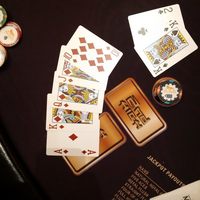
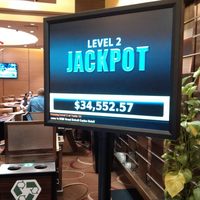
It was very exciting to win that bet, but it would have been emotionally devastating to be dealt that hand without having made the $5 bet. Other casinos have a pay table that can, for example, pay various amount topping off at 8,000 to 1 for a seven-card straight flush. These tables typically have a minimum bet of $1 ($5 if you want an “Envy” bet that shares to a small degree in a large jackpot won by another player at the table) up to a $100 maximum. Unfortunately, these tables have a maximum cap of $60,000 or $80,000 on any wins. When it comes to Pai Gow Poker, I just plug my nose and make a side bet with every hand in order to avoid the catastrophic outcome of getting dealt that huge hand without having placed the side bet.
There may be other side bets where it is just too much fun not to bet them. We cannot help ourselves from betting the feature bets on craps tables. These include “Golden Dice,” “Fire Bet,” and the “Small-Tall-All.” Golden Dice has an increasing payout based on how many passes the shooter makes, culminating in a 5,000 to 1 payout if more than 25 passes are made. The Fire Bet pays a sliding amount based on points for the 4, 5, 6, 8, 9, and 10 being made before the dealer craps out with the payouts increasing from 4 to all 6 numbered points being made. The “Small-Tall-All” is the most fun. That is getting paid outrageous odds of 35 to 1 each) if all the small numbers (2-6) or tall numbers (8-12) numbers are rolled before a seven or if all the numbers are rolled before a seven (all) for 176 to 1. This is a bad bet, yet it is really fun when it hits. On one crazy roll at the Bellagio in 2018, the roller I was betting on cleared the small-tall-all two full times and then the small once more before getting a seven-out. The other craps bet that is hard to resist is the hardways bet. It can be argued whether this is part of the game or a side bet, but either way it is a bad bet. The hardways are terrible odds bet. Yet, when the table is hot and the shooter keeps rolling hard numbers, it is hard not to jump on the bandwagon. Understand though, this is all about having fun and not maximizing your chances to win.
The bottom line is that side bets are bad and only favor the casino. However, there are certain instances that we recommend betting them in order to avoid kicking yourself for missing out on that huge hit or just because they are too much fun not to play. But you can only do so if you have the resources to make these bets and they do not distract you from your main mission of maximizing your odds of winning.
Take every financial benefit the casino will give you.
Since the odds are always against you in the casino (except the behind the line odds bet on a craps table), you should focus on getting as many benefits from the casino as possible. Plus, getting compensation for your play (comps) is a large part of the fun. If your goal is to learn to play in a way that maximizes your odds and ability to win, why wouldn’t you also want to get even more value from the casino through comps? After all, the casino is potentially giving away something of value. Why wouldn’t you want to take it?
There are many books and websites dedicated to the science of getting comps from a casino. Some of the best are Max Rubin’s Comp City or Jean Scott’s The Frugal Gambler and the sequel More Frugal Gambling. Jean Scott’s books in particular focus on techniques for the low roller to get comps. These books, and many others like them, are a better guide to getting comps on a budget. My experience, however, is about getting comped on a larger scale. I am a whale. Well, if not a whale, a pretty big tuna. I get the nicest rooms and villas at premier properties, spa treatments, gourmet food and beverages, free concerts and show tickets, and luxury transportation. This is because my playing habits naturally result in large comps – playing lots of hours, having a large average bet, and playing most of my time on fast games (like blackjack or craps as opposed to pai gow poker). The only thing I do not do is play a lot of slots or roulette, which are highly rated by the casino for comps. Later we will talk about these high-end comps and the enjoyment of them – as that is the gambling lifestyle for which this site is dedicated. For now, however, we will talk about the basics of how comps work and give you the very basic strategies of how to maximize them.
First, it begins with an understanding of how and why casinos comp players. Obviously, casinos comp players as a marketing tool to get players into their casinos. As such, not all casinos’ comp programs are equal. Some casinos have much more aggressive comp programs to get players to their properties. Some do not value their comp programs as a significant part of their marketing. For example, the comp programs in Caribbean casinos, such as those in Aruba, are terrible. The Aruba Marriot Stellaris Casino does not even rate players at table games for comps (except double zero roulette – which tells you something about how bad the odds are on double zero roulette). Instead, other than roulette, this casino only rates slot machine play for comps. And the comps are minimal and expire after a short period of time if not used. This is because people are typically not choosing to stay at the Marriott Stellaris in Aruba for the casino comps. They are incidental to the overall marketing of that hotel.
In cities outside of gambling meccas in Nevada or New Jersey, there can be better comp programs in order to compete within that casino’s locality. For example, MGM no longer gives express comps (dollars for any use in the Casino) based on rated table game play at its casinos – except for MGM Grand Detroit. This is because the MGM Grand Detroit needs to compete with the table game comp programs at the other two casinos in Detroit (Motor City Casino and Greektown Casino), the one across the River in Windsor, Canada (Caesar’s Windsor), and the one in Toledo, Ohio (Hollywood Casino). The point being that casino comp programs cannot only vary by casino operator, but also by different properties operated by that operator. So, a savvy player will need to do his or her research to find the best comp program. Once you find that program, it is advantageous to put most of your play into a single program so you can become as big of a player within that program because most of the programs are tiered so the comps increase substantially as you progress through the tiers. This does not mean you shouldn’t join other players club programs when playing at those casinos – you should. It just means that to get the most benefit, it pays to be loyal. Which is exactly the point of the casino having the comp program in the first place.
We have researched countless players club programs and read numerous books, articles and websites about how to maximize comps. It always begins with the calculation of how much the casino anticipates you will lose, or should have lost, and then the casino will compensate you a percentage of what that loss could have, or should have, been. Here’s a shocker for a casino – it is all about the math. There are different terms used in the casino industry for the amount you could or should lose. We have seen this referred to as Total Anticipated Loss, Estimated Loss, or Theoretical Loss (abbreviated in the industry as a player’s “Theo”). We will use Theo as it is the most common term in the industry.
The Theo calculation is designed to mathematically calculate an estimate of your loss over a long-term basis. Theo must be calculated on a long-term basis since wins and losses can vary wildly in the short term. In theory, your Theo should be an accurate number over an extended period and gets more accurate the more time you gamble. The casino’s plan is that while there may be short term winning streaks, the more you play the more you fall victim to what it believes is the inevitability of the power of statistics and the fact that the casino has a mathematical advantage on every bet made (except the behind the line odds bet in craps). The calculation of a player’s Theo is in actuality very complicated and very inaccurate. This is because every game has a different house advantage, every game has a different speed at which bets are made and resolved, every bet in action does not necessarily result in a win or loss (many games have pushes or bets continue to ride until the next action – like the next roll in craps), some players are better than others at using perfect decision making strategy and win more, side bets have wildly different odds than main bets even though they are at the same table, a player’s bets may vary wildly during any given session at the table, and human beings are providing the data on the player’s average bet. Theo tries to take most of these factors into consideration, but Theo is only as good as the humans inputting the data – garbage in, garbage out.
In its simplest terms, Theo is calculated as follows: amount of average bet (AB) multiplied by number of resolved bets per hour (which varies by game) (RBPH) multiplied by number of hours played (HOURS) multiplied by the casino’s theoretical hold percentage (which varies by game) (HOLD%). If the player plays different games, a Theo needs to be calculated for each game. The different games then need to be weighted based on the amount of time at each game. For purposes of a simple calculation, we will assume one game as follows:
(AB x RBPH x HOURS) x (HOLD%) = Theo
Let’s assume someone is only playing blackjack for 10 hours, with an average bet of $100, and the casino assigns to blackjack a RBPH of 200 and HOLD% of 12%. We recognize that a 12% HOLD% is significantly higher than the blackjack edge of approximately .50%. This is because casinos recognize that most players do not play with perfect strategy. Varying this hold percentage will have significant changes to the Theo. The RBPH will also vary tremendously based on how fast the dealer deals, how fast the player plays, whether there is a hand shuffler or a machine shuffler, and how many players are at the table. A RBPH of 200 for a single player at a machine shuffle table is reasonable for blackjack and is a nice round number to use in our formula. Putting these numbers into our formula, we get the following Theo of $24,000:
(100 x 200 x 10) x (12%) = Theo of $24,000.
In words instead of numbers, a player who plays blackjack alone at a table with a machine shuffle for 10 hours betting an average of $100 would expect to theoretically lose $24,000 assuming a twelve percent casino hold. Reducing the hold percentage to 4% (which is likely more accurate for a sophisticated blackjack player attempting to use perfect strategy on a table with player friendly rules) would reduce the Theo to $8,000. But for our illustrative purposes, we will stick with the $24,000 Theo.
Once the theoretical loss (Theo) is established, it is then up to the Casino to apply a chosen comp percentage to the Theo to calculate the amount it wants to comp the player. This decision is inherently a business/marketing decision by the casino. For example, when attempting to get high comps from the Wynn/Encore in Las Vegas, I was advised that the Wynn/Encore comp criteria is usually higher than its competitors. Our research reveals comp rates between a low of 10% and a high of 40%. Let’s use 20% as an average. Under our example above of a $24,000 Theo, a 20% comp rate would calculate to a $4,800 comp for our 10-hour, $100 average bet blackjack player who plays alone with a machine shuffler. But remember, this amount varies tremendously when you change the inputs. Just one example would be switching to craps. If you are a pass line player that takes full odds behind the line after the point is established, your odds bet will not even be rated at all! So, if you have a $10 bet and have taken $50 odds, you have $60 in play. However, the casino will have you rated only for a $10 bet. This is because there is no house advantage on the $50 odds bet, so the casinos do not rate it for the player's benefit.
Now that we have explained how comps work, what are the rules/ways for getting comps? While it all comes down to the more you play and bet the more you get comped, there are some significant strategies to being comped that we list here.
- Get signed up for a players’ card before playing, and get your host at the property assigned before playing. You must have these two things – a players’ card and a host – to get your comps. If you do not have a host at a property, go to the players’ club desk and ask for a host, and you will be assigned one. It may take a while to get your host and meet him or her, which is maddening because your heart is beating fast and you want to start playing, but if you are playing for comps this must be done. At some properties a pit boss can comp you for some things, but it is going to be more advantageous to go through the casino’s host department.
- When it comes to getting benefits from the casino, the best rule of thumb is be as aggressive as possible – but in a nice way. If you do not push for your benefits, you will only get the default amount the casino chooses to give you. Sometimes this is good, but you can always do better. The pit boss has discretion on setting your average bet, so at the end of your betting session ask the pit boss what he or she had you rated at for average bet. Argue for more. Do it nicely, but never accept their first offer. If you cannot get the pit boss to move to a number you believe to be even close to accurate, send your host an email to let him or her know you think your average bet is more than your rating. It helps to plant this seed in real time.
- Tip your dealer. We will have a much more detailed conversation about dealer tipping in later posts, but pit bosses favor players who tip the dealer and will be more generous on setting your average bet. Plus, tipping the dealer is just the right thing to do.
- Comps get fully resolved when you are done playing, but you may be able to get your room comped as you play. If you do not have your room comp set in advance, ask the host what you need to do to get the room comped and when you can contact him/her to ask if you have met the requirement. In many instances no one promises you anything until you are done and checking out. You may need to take the risk of the room cost and then negotiate with the host prior to check out.
- If you believe your host treated you fairly and you anticipate returning to the property, send the host a gift that is about 10% of the value of the comps you got. It is the thought that counts. Try to get to know your host and make it meaningful in some way. For example, a special bottle or case of wine for a host that likes wine.
- Negotiate the comps you get other than a room. Ask for a free buffet pass or a cut the line pass. Rooms are regulated more carefully as they need to be inventoried and go through the suite manager. But coupons or passes can be more freely given.
- Some people argue to make a large first bet when the pit boss is watching and then reduce your bets when the pit boss is not looking. The theory is the pit boss records that you are bigger player than you actually are. This is nice in theory, but it assumes that the pit boss is easily tricked. This is rarely the case. It is more important to play intelligently and alter your bets based on the flow of the game rather than thinking you are tricking someone. Play to win, not to get comps.
- Some people also argue to put all your money on the table when you do your initial buy-in because this will make you look like a bigger player and get the pit boss’s attention. We disagree. A good and typical pit boss will track any future buy-ins. It is more important to not put more money on the table than you are willing to play.
Now, the most important point – take everything you can get and ask for more! Take the rooms/food/drinks/show tickets/spa credit, etc. One of the great joys of casino gaming is the “free stuff” you get. Of course, it is not “free” because you are risking your money to get the stuff, but this does not change the fact that you are being given it without paying for it. Even when you lose at the tables or the slot machines, you can feel like you got something when you get the comps.
It is like taking a vacation. When you go on a non-gambling vacation you don’t say, “how much free stuff am I going to get and how much money am I going to win on this vacation?” Instead, you pay for the vacation because it has a value to you. The rooms, food, drinks, shows, etc. that are comped have a value. So, when you get those for “free” win or lose, you feel like you really got something without paying for it. Having this mentality is one of the ways to separate people who get enjoyment from casino gaming from those who get frustrated and angry when they lose.
When the Top Gambler goes to Las Vegas, he stays at the top properties, gets transported in Rolls Royce limos, eats gourmet food for free, spends time in an in-room private pool or at a pool cabana, and gets anything he can imagine being given. It is like getting a free vacation. The mentality is that if you lose at the tables, that’s okay because that was the cost of getting all the free stuff that you really enjoyed. While it is unfortunate to have gambling losses that exceed the value of the comps, we feel much better if that happens while we have maximized the comps we got. We can chalk it up to the “cost of doing business.” If you also win, well that is simply the best feeling there is. You get all that stuff and walk away with more money in your pocket then when you came in.
Some people don’t want the pressure of having to play for comps. They would rather just pay for the room and food because that way they do not feel pressure to play to earn the comps. If that is how your mind works, fine. But that makes no sense. Serious casino gambling is fundamentally based on strategy and discipline. You do everything to maximize your odds and make smart betting decisions. To choose not to fully take advantage of the comps that will be given to you is like accepting a blackjack rule change that a dealer twenty-two is now a push instead of win. It is accepting an outcome that is costing you money. Get the comps! Every last one of them. Enjoy them and the happiness that they bring. It is all part of the overall strategy of how to maximize your gaming enjoyment.
Track wins and losses sufficiently for IRS purposes and pay all taxes.
This section must begin with a disclaimer. The information provided on this website does not, and is not intended to, constitute legal advice; instead, all information, content, and materials available on this site are for general informational purposes only. Information on this website may not constitute the most up-to-date legal or other information. Readers of this website should contact their attorney to obtain advice with respect to any particular legal matter, and the tax consequences of gambling winnings and losses in particular. No reader, user, or browser of this site should act or refrain from acting on the basis of information on this site without first seeking legal advice from counsel in the relevant jurisdiction. Only your individual attorney can provide assurances that the information contained herein – and your interpretation of it – is applicable or appropriate to your particular situation. Use of, and access to, this website or any of the links or resources contained within the site do not create an attorney-client relationship between the reader, user, or browser and the website author(s).
Whew! Now with that out of the way, let’s talk about the impact of taxes on gambling winnings and losses. In its most basic terms, gambling winnings are income and gambling losses can be used in the same year to offset gambling winnings. If you are skilled enough and lucky enough to have more gambling wins than losses in a given year, you will have to pay ordinary income taxes on these net gambling wins. Gambling losses cannot be carried forward to future years. This always struck us as unfair and punitive. The casino has a mathematical advantage against us, we beat that mathematical advantage, but then we have to pay a huge amount of those winnings to Uncle Sam (at whatever your ordinary tax rate is)? Really? And if we have huge losses in one year and gains in another year we cannot apply those losses to offset those gains which we have to pay taxes on? Are you serious? Yes! And it hurts to pay taxes on hard earned gambling wins. So many people just don’t do it. How do they get away with it, and should you do this?
In order to understand the tax implications of gambling, some background is necessary. The IRS does not provide a lot of detail on the intricacies of reporting gambling income. IRS instructions are clear that gambling income should be reported as “other income” on the filer’s 1040, and a person who itemizes their deductions then shows their gambling losses on schedule A to offset the income -- but only up to the amount of the gambling winnings. This process is set forth in IRC Sec. 165(d) which states as follows: “Losses from wagering transactions shall be allowed only to the extent of the gains from such transactions.” This all gets complicated because the burden is on the player/filer to properly calculate these wins and losses, and the IRS gives scant guidance on what are acceptable ways to do this. Complicating this process further is the fact that: (1) win/loss statements provided by casinos are notoriously inaccurate and are not accepted by the IRS as accurate; and (2) Form W2Gs are only provided by the casinos for certain wins ($600 or more if the amount is at least 300 times the wager, $1,200 or more in winnings from bingo or slot machines, $1,500 or more in winnings from keno, and more than $5,000 in winnings from a poker tournament) and they only show the amount of the win without regard to any offsetting losses incurred prior to or after that win.
Faced with these calculation problems, a preferred methodology has been created and generally accepted by the IRS (although not formally in any regulation) and the US Tax Court. This methodology is a record keeping obligation imposed on the player/filer that has become known as the “session” requirement. It is unacceptable to simply report to the IRS the total net win/loss for a given year. For example, stating that I won a total of $50,000 at the MGM in a year, but lost $40,000 at Caesar’s that same year for a total income of $10,000 -- this is unacceptable. You are required to break down your wins and losses for each “session.” Of course, this is complicated because a “session” is undefined. It is accepted that a “session” is not a single roll of the dice or each hand – that is absurdly impractical. Instead, the courts imply a time, place and activity requirement. If you play on two different days (time), those are different sessions. If you play at two different casinos (place), those are two different sessions. If you play two different games like switching from blackjack to craps (activity), those are two different sessions. As crazy as it sounds, you need to track your wins and losses for each of these sessions. Each time I walk into a casino, I have a notebook (available for purchase in our Store) that I use to track each separate gaming session played at that casino that day. When preparing your taxes, you should prepare an analysis of these gaming sessions with an explanation to the IRS. We know this sounds crazy, but it is United States law! Each applicable state law should be consulted as well for its requirement.
With that basic background out of the way, now the advice . . . . know and follow the law and pay your taxes. Unless you are a professional gambler (which implicates an entirely different set of rules and regulations that go beyond the scope of this section), you are gambling to have fun and possibly make some money. The last thing in the world you need is trouble with the IRS. Even though it feels unfair, pay the taxes on wins and track all your sessions. People who do not pay taxes on gambling wins are not getting away with anything any more than people who cheat on their taxes generally are getting away with something. Their time will come, or they will constantly live in fear that their time will come. You never know when that letter with the terrifying IRS return address will appear in your mailbox. Do the right thing and pay the taxes on the winnings. You have the money to do so because you won it. You will sleep better at night. And, after all, it is the law.
Limit or eliminate time at bad odds games, especially slots.
If you are going to gamble and risk your money it seems crazy not to maximize your chances of winning. That is why we believe in learning the rules of each game and strategically playing to maximize your wins. But that also applies to which games we play. Different games have different odds of winning, and the odds can rapidly change based on the bets you make within the game. For example, craps can be the best odds in the casino if you play conservatively and make pass or don’t pass bets and take or lay full odds. However, if you make the center of the table bets (any of the horn bets, any seven, hardways, or hop bets), it can be one of the worst games in the casino. Adding insult to injury there are websites out there that give wrong information about the best and worst games to play. So be careful what you read and what you play. We will do our best to give you our best and worst games at the casino, but our advice is based on playing at tables with player friendly rules (like 3:2 blackjack), playing perfect strategy on those games, and only making the best bets available to players within those games.
Based on the above criteria, we will list our favorite games and then focus on the games to stay away from. We focus on the best games in more detail elsewhere on this site, but they are as follows:
1. Craps -- Yes, this is probably a surprise to most people because if you play craps you know how harsh it can be. But with the behind the line odds and lay bets that have zero casino advantage, it is hard to beat this game mathematically. Just stay away from the place bets (other than the 6 and 8), field, and everything in the center of the table!
2. Blackjack (both traditional and Spanish). It is well documented that blackjack played properly at a fair table (6 deck without continuous shuffle, and with 3:2 blackjack payouts, surrender allowed, dealer staying on soft 17, 4x splits, doubles after splits, etc.) the house edge can get as low as .5%. As discussed elsewhere on this site, Spanish 21 also has excellent odds, but it is often misplayed by players because the basic blackjack strategy does not maximize the odds on Spanish 21. The casino makes out because players play it wrong. If played properly using a completely different strategy than classic blackjack, then the odds can be as low as approximately .75% in the casino’s favor.
3. Roulette – This is not a misprint. Roulette is notoriously one of the worst odds games, so there are some caveats to putting it on the “good” list. First and foremost, you must only play on a wheel with only one zero. If you play with a wheel with two zeros (and now some casinos have three zeros), it shoots the casino’s advantage to over 5%. Also, 2:1 bets greatly increase your odds on a single zero table. If you can find a table where an even money bet only loses half if it lands on the single zero, then roulette is tolerable. The advantage to roulette is that it is easy to play. So that eliminates the casino getting an advantage for bad player strategy. Rather, the casino’s advantage derives from bad player bets and bad rules.
4. Baccarat – This is not the best game, but it is not the worst either. Like roulette, the advantage to the player is that there is no way to mess up in game strategy. The player does not make any decisions once the cards are dealt. With less to mess up, the odds are better for the sloppy player. The key to maximizing the odds on baccarat is to not make any side bets and always bet the banker (which has slightly better odds than the player even after commission). If you start betting the tie or periodically switching from banker to player, this may tip over onto the “bad” games list.
5. Ultimate Texas Hold’Em – This is not a “classic” casino game, so many people do not play it. It gained popularity with the Texas Hold’Em fad that hit in the 2000s. If played properly the casino advantage can be reduced to just over .5% (similar to classic blackjack). The difficulty is learning to play properly. It is not Texas Hold’Em. It is a game based on Texas Hold’Em. So if you don’t know the strategy, it is going to throw the odds into chaos and make this a “bad” game.
6. Video Poker – We have to put this on the list because mathematically it belongs here. But it has many caveats. All video poker machines are not alike. The payouts and rules are different, and that changes the degree of the casino advantage. Also, it must be played perfectly correct to get the best odds. There are many ways to take this game from one of the best in the casino to one of the worst. We do not play video poker because we have an aversion to playing games on a machine. But we recognize that we must be fair and include it.
7. Pai Gow Poker – This is different than the tile game Pai Gow. This is where you are dealt seven cards and need to make two hands – one with five cards and one with two cards. You need to win both hands against the dealer to win. In its pure form the casino takes a 5% commission on wins, and you can be banker every other hand. Banker hands win on ties (which actually happens with some regularity on the two-card hand). There is a side bet which does not factor into this analysis but is discussed elsewhere on this site. We are seeing more and more variations on this game, including differences in how the casino sets the dealer’s hand. We also see variations on the commission in exchange for pushing certain hands (like a dealer’s queen-high hand). Now we are now even seeing “face-up” Pai Gow Poker where the player sets his or her hand after the dealer’s hand is set, thereby eliminating instances where playing your hand in a different way could have resulted in a better outcome (win or push). In exchange a dealer ace-high five-card hand is a push and you cannot bank. We like the “face-up” game because it eliminates all strategy and misplayed losing hands. The game is notoriously slow, especially if there are multiple players at the table. It is also a very fun game. By its nature it generates lots of talk around the table. We recommend learning and playing this game as an alternative to the fast-paced games of blackjack, craps and baccarat. Sometimes you need to just slow it down.
Now, let’s focus our attention on the classic games in the casino to avoid. We cannot include every game, so we focus on those that are well known and easy to find. If there is a game that is new to you or that you do not know well, our advice is to not play that game until you have researched it thoroughly. This would include playing it for free on an app online. Better to make mistakes when you are playing with virtual money rather than the real thing. With that said, the following are the bad boys of the casino:
1. Slots. No surprise here. Anyone who has done any research into casino gaming quickly learns that slots are a disaster for the player and a huge revenue source for the casino. Just look at the gaming floor. Most of it is covered with slot machines, not table games. That tells you something. Plus, the casino does not have to pay dealers – just slot attendants and the people who maintain the machines and the pay kiosks. Everyone knows that slots are terrible from an odds standpoint, but we must talk a bit about them because so many people are going to play them regardless. I’ll tell you a secret, even the Top Gambler occasionally throw some money in the high limit slot machines. Darn it! We just cannot resist!
Why do we play something that has been electronically programmed to destroy us? We think it is important to understand slots so we can convince our mind why they are so dangerous so we can intellectually make the decision to avoid them. Oh, and also teach us how to play them when we do give in and play. Darn it! We just cannot resist!
Slots attract the novice and unsophisticated players because you do not need to know any strategy or any rules. There is no fear that you will make a mistake. You just push the button and the machine spins the dials. There are noises and lights and bonus events like free spins and giant wheels or other games on top of the machine. There are also giant jackpots, some of them outrageous progressives, just waiting to be won. Plus, the game moves quickly, and we instantly find out if we win or we lose. All this makes it hard to resist throwing money in the machine and see what happens.
In order to deter you from playing slots, we are just going to give you some hard facts. While table games have inherent odds based on the rules, the casino advantage is quite small if the games are played properly. At table games you become a better player, and increase your chance of winning, by learning the rules of the game. Plus, while the statistics inherent in the games exist, the cards themselves are not programmed with a pre-determined house advantage. Slot machines, to the contrary, are programmed to mathematically have the casino win by a fixed percentage. Slots are regulated by the applicable state gaming commission and programmed for a mathematical payout percentage. Depending on the state and the casino, the payout can range from 85% to 95+% bet money being returned to the player. So, even the best returning slot machines return less to the player statistically than almost all table games properly played.
Just like table games, the casino advantage is a long-term statistical probability. In the short term, however, a slot machine can return huge amounts. This is what makes them so appealing. It is possible to win that huge progressive, just like it is possible to win the Powerball or Mega Millions jackpot. You never know what random setting for the wheels is going to come up when you push that button for the bet.
The mechanics of how slot machines work, and the use of a random number generator, is beyond the scope of this website. There are many books and websites that will provide you information on how slots work if you are interested. We have read countless articles and books on the topic (because we are just interested in this stuff), and this leads us to a few simple rules if you are going to play.
a) Always use a players’ card to track your play. It is a myth that using a players’ card reduces your odds of winning. If you are going to play slots you may as well accumulate freeplay (based on achieving point levels) and comps. This takes some of the sting out of the bad odds.
b) Decide going in how much you are going to spend – and do not have any other money in your wallet/purse. When you play a table game, you must take the money out and go through the procedure of getting chips. It is a process, and for some reason we are better able to control ourselves. For slots, we just feed the bills into the machine and lose our minds because we literally think the very next bet is going to be the one that wins big. Plus, we put in more money because there may not be enough credits left on the machine to make the maximum bet. If you want to play those credits with the maximum bet (see below), then you keep dumping money in rather than cashing out. If you do not set a limit, you are going to lose everything you got.
c) Set a target win and leave when your reach it. This is very difficult with slots. If you can do it, great. The better advice is if you do hit a large jackpot, just stop! Consider yourself so lucky. Do not give it back. Trust us. Plus you will have a nice story to tell. Once you get in the car and drive away with the winnings, we promise you will not have remorse for not playing more. The downside of giving the big win back is demoralizing. You just have got to get out of the casino to break the pull back to the machines. Be strong.
d) Determine your objectives going in and stick with them. Do you want to: (1) play for a long time; (2) have the best odds to win some money; or (3) swing for the fences and chase the big jackpots. If you want to play for a long time, play a low coin denomination, do not play multiple lines, do not play the bet that just gets you the chance at the huge jackpot, or pick machines without huge jackpots. If you bet one line, your chance of winning is the same on that one line as the odds on all ten lines you bet. You are not improving your odds at all, you are just betting ten times as much with every spin. Machines are programmed to pay out a certain percentage. If the machines have large jackpots, that lowers the frequency and amount of the lower wins – because the odds calculation needs to consider the possibility of large wins. So if you just want to win some money, play machines without the large jackpots and do not bet the extra coins that do not give you more play lines but instead give you a chance to multiply the play lines or give you eligibility for the huge jackpot. If you want to win huge jackpots, go for it. Play the machines with the biggest potential returns and play the maximum bet with all the allowed bonus coins. This is how we play when we play slots. Just understand, however, that you are reducing your chance for small or modest wins, and the giant wins are almost surely not going to happen. You are playing for the dream of hitting it big. Which is fine. But understand that this is what you are doing. Just like playing the Powerball or the Mega Millions. There are lesser prizes you can get, but you are doing it to try to land the big prize. If you want to chase this fantasy, go ahead. Just understand that the outcome almost every time is that you are going to lose everything you bet.
e) Switch machines as much or as little as you want. It does not matter. When we play, we switch machines if we get a large jackpot and continue to play. People do this because they think it matters. It does not. The machine’s last outcome is irrelevant to its next outcome – or its next 100 outcomes. But we cannot help ourselves. Whatever makes you feel good in this regard, just do it. Plus, it is fun to play different machines.
f) If you win a jackpot over $1,200, you will need to wait to get a hand payout with a W-2G. You will owe the government money on the win unless you can show offsetting losses. The government also takes withholding that may be lower than your tax rate. So you may have to pay more at tax time. If you are really a slot player, you will almost certainly have losses that exceed, or substantially reduce, your wins. So have the documentation to file with your tax returns so you get any withheld money back. Bottom line, keep the forms, keep meticulous records, know how to treat gambling winnings and losses on your taxes, and follow the law.
2. Roulette. Yes, roulette is on the good list and the bad list. As discussed above, if played properly roulette can be a good bet – playing on a single zero table and only betting 2:1 paying bets (red or black, odd or even, 1-18/19-36). If you do anything else, it is trouble. Playing the inside bets (betting on single numbers) is intoxicating because the payout are so big. The payouts are so big because the odds of winning are so low. Even on a single zero table, inside bets do not have very good payout odds. If you play on a double or triple zero table, it is insanity to play.
3. Big Six or Wheel of Fortune. This is the big wheel at the casino with multiple numbers (or symbols or colors) to bet on. The payouts, and the odds, vary based on what number/symbol/color you bet. But the bottom line is it is among the worst bets in the casino with the house edge ranging from a low of 11% to a high of over 22%. Rarely do we say never play a game – in this instance we say never play this game. There are much better alternatives. Even triple zero roulette is better than this.
4. Almost all craps bets. As discussed above, craps can be among the best games in the casino, and it is the only game with a bet that has no house advantage. The best bets are the pass or don’t pass bets with full odds. If you want to make place bets on numbers after the point is established, the best bet is the 6 and 8. These two numbers have a house advantage of about 1.5%. The field is just over 2.75%. All other bets have a house advantage over 3%, and many of the other bets have some of the worst house advantage in the casino (exceeding 10%).
5. Caribbean Stud Poker. The house edge for this game is over 5%. However, this is a bit deceptive because that does not take into consideration the increasing of your wager which strategy dictates would happen about half the time. Our problem with this poker game is playing with optimal strategy is very difficult. That makes the house edge increase even more. With all the other games available in the casino, it makes little sense to play this poker variation. Better to play Ultimate Texas Hold’em for your poker fix.
6. Keno. We feel silly putting Keno on the list because it makes us feel old. When we first started gaming there was a Keno game constantly being played and displayed on monitors throughout the casino, and there was a dedicated Keno room in most casinos. This has gone by the wayside. The upside to Keno is the opportunity for the big win. The downside is the house advantage is horrific – exceeding 25% (but varies on the amount of numbers played). Bottom line, do not play Keno.
With all this analysis about what are the games with the best odds, we are also about having fun. Because of this, we never say don’t play these bad boy games (except the Big Wheel). Just understand, however, if you are going to play the bad boy games, then you are deciding not to try to maximize your winning potential.
Significantly vary the size of your bets.
It is hard to say that any single piece of advice on this site is the most important, but if we had to pick one – this would be it. When we walk into a casino, we know the odds are against us. We know that casinos calculate our theoretical loss. They can calculate this because over time, in theory, we will lose -- not win. We may have wins in the short-term, but the casino figures it will get us in the end. If you bet the same bet every time, you will almost certainly lose it all.
If you vary your bets significantly, this changes the odds of winning. The game’s odds do not change, but you are betting something different. In effect, you are now betting that you will win the big bets and lose the little bets. This is a different bet than the same $25 or $100 bet on every blackjack hand played which will grind you down to nothing over time. The casinos account for this by estimating your “average bet” for their theoretical loss calculations. By using an “average bet” concept, statistically you will still lose in the long run because the calculation is based on a single bet amount (the average) over time. When you vary your bets significantly, it does not change the fact that mathematically the house still has the same edge. It does not change, in theory, the fact that the odds of winning or losing that big bet are the same as winning or losing that little bet. So mathematically you are not improving your overall odds by varying your bet amount. We get it. But it does change the way you bet, and our decades of high stakes gaming experience has shown us that over time we come out ahead by varying our bets and being disciplined in our gaming.
First, varying your bets does not mean adopting a rigid betting system. We have reviewed many betting systems, and we have not found a betting system that consistently results in increased winnings. The much-discussed Martingale system, for example, just results in too much risk to win too little money. The Martingale is the progressive system of doubling your bet until you win, thereby guaranteeing a win of the amount of the first bet. The problem is the possibility you will get to the point where you are making a huge bet just to try to win a small amount with the possibility of running out of money or hitting the table maximum. We are strongly against this system or any of its alternatives such as the Split Martingale (Labouchère System of managing a list of bets to total a desired win amount), Anti-Martingale (increasing bets after wins and reducing after losses), and the Oscar Grind Method or Hoyle’s Press (a system of betting less on losing streaks and more on winning streaks until a desired profit is obtained). Adherence to any of these systems simply does not guarantee a profit and can result in a catastrophic loss. Plus, losing doubles and splits in blackjack can really cause the bet amount to increase dramatically.
Second, varying your bets does not mean counting cards in blackjack and varying the size of the bets based on the deck’s count. Blackjack is a unique game in that the past hands that you saw really do influence or change the odds for future hands. The odds in the game change with each hand as either more high cards or low cards are removed from the remaining cards in the shoe. Casinos have limited the advantage card counters can get by playing multiple deck shoes and not dealing all the cards in the shoe (deck penetration). The more cards left in the shoe before the shuffle limits the impact of a discrepancy between high cards and low cards played. Despite this, players can still count cards and believe they are using it to their advantage both in the amount of their bets and the way they play the hands that are dealt. The casinos also combat against card counting by the pit boss keeping the deck count in his or her head and watching to see if a player modifies his or her play based on the actual deck count. In other words, the pit boss is counting cards too. If it is determined by the pit boss that you are counting cards, you will not be allowed to play. Since we are all about playing and having fun with the gaming experience, we do not count cards. If we did, we could be ejected and not allowed to play. We do not want that.
Third, varying your bets coincides with our view that the force of luck coupled with disciplined play will ultimately determine whether you win or lose. Since luck cannot be summoned by us (although some may argue prayer helps), below are our rules for disciplined play and varying bets that have worked for us for decades and have made us consistent net winners. While we provide these to you, it is best to learn these while playing with the Top Gambler.
1. Always make in-game decisions that maximize your odds of winning. This is not really about varying your bets, but we wanted to make it clear that we are not advocating varying in-game playing strategy. For example, in blackjack you should play perfect strategy (including never taking insurance or even money on blackjacks with the dealer showing an ace). Do not play hunches. All it does is lower your odds of winning ever so slightly, and we want those odds in our favor as much as possible. Of course there are instances where if we would have waived off that hit or not surrendered that hand we would have won, but do not get sucked down into that rabbit hole. There are also the instances where perfect strategy saves you. Play perfect strategy and then you will not be second guessing yourself.
2. Always start slow. Keep your bets low at first. It gives you a feel for the table and lets you avoid catastrophic losses early which will send you home without even having had the chance to play a lot. We understand the downside risk of missing a great run early, but you can always ramp it up quickly if you are winning. Avoiding the downside of a catastrophic beginning is more important. For example, we begin every shoe in blackjack with our minimum bet and work our way up from there.
3. Do not throw out an occasional huge bet that is way out of line with the range of your typical bets. For example, if your bets generally range between $100 and $1,500 a hand, do not make a bet for $5,000 – especially in blackjack. If you do this, many bad things could happen. First, you could lose the bet. Second, you could get a hand that should be split or doubled or a combination of splits and doubles. You can always choose not to double (or double for less – which we never recommend), but splitting may be required – think 8s and aces. This means you could end up risking way more than you intended or may not have the funds available to properly play your splits and doubles – which reduces your odds. Oh, and you could lose all those bets. Third, you could push the bet. Finally, you could win the bet. This sounds great, but it is not. If you win, most people are not disciplined enough not to do it again. We hate to say it, but you will keep making these huge bets until you lose them and go negative.
4. Do not chase your losses. If you make a bet within the high side of your betting range and lose it, do not chase it with a series of larger bets to try to win it back. If you really feel you will win it back, we typically allow one subsequent bet of the same size (not a larger size) to win it back. If that bet does not win, let it go and revert to smaller bets. Under no circumstances do you ever chase those two bets with another large bet. Of course it is possible to win that bet, but losing streaks are real. If you lose three or more large bets it is very difficult to recover (financially or emotionally). To use a poker term, do not go “tilt.” Lower your bet and work your way back up. This rule more than any other will keep you in the game for a long time. If it just is not working at all, stop. It will not be your last time in a casino. Get out and play another game or take a break. We all have to eat and sleep at some point.
5. Absolutely add a hand in blackjack. We are big believers in playing two hands in blackjack. Historically our biggest runs have come when playing multiple hands. Winning two hands on a single dealer bust is just great. We recognize there is no statistical advantage to playing two hands versus one. However, when things are going great you can make a lot of money when both hands are winning (or stem your losses when one hand’s win covers another hand’s loss). Obviously both hands can lose. If this is happening (bad luck streak), either leave the table or go to one hand. Whatever you do, make the bets equal for both hands. It is emotionally maddening to lose the big bet hand and win the small bet hand. This is also doubling your action, which should increase your Theo (theoretical loss) for setting your rating for comps. Make sure to ask the pit boss about your average bet when you leave the table and point out that you were playing two hands. If you do play two hands, be mindful not to over bet because multiple splits and doubles can cause you to put a lot of money out on the table.
6. When you are up, bet more aggressively. There are two ways to approach money won that puts you ahead for a session: (1) I’m now playing with the casino’s money; or (2) once that money crosses the table it is now my money. We adopt the former – I’m now playing with the casino’s money. We appreciate the fact that once you’ve won that money it is yours. That is 100% a true statement. But this mindset makes you too conservative. If you are up, things are going well. Do not back down now. Our rule of thumb is you play normally until you are up 75% of your buy-in. When you hit this amount, set aside in a separate pile on the table the chips equaling the full amount of your buy-in with the intention of not breaking back into it. At that point, increase your bets more aggressively. If you keep winning, you can keep setting aside more money into the “do not touch” pile. Keep going until things turn bad. Try to ride out losing streaks. If you cannot, you leave having made a profit – but certainly you are not leaving with a loss. In all our years of gaming we never walked away at our highest point. We have always given some money back from our high amount. Otherwise you will never know if you could have gone higher. If your mentality is that this is the casino’s money, while at the same time setting aside your buy-in money, you will be acting with the perfect aggressive/conservative balance with the chance to win big (and have more fun too).
From escorted casino visits to bachelor and bachelorette parties, we are here for individuals and small groups ready to win!
Join Today. It’s Free.
Get access to Top Gambler Advice, write casino reviews, and gain access to exclusive content.